This indicates that as monetary organizations went into the marketplace to lend cash to property owners and became the servicers of those loans, they were also able to produce brand-new markets for securities (such as an MBS or CDO), and benefited at every step of the process by gathering charges for each deal.
By 2006, majority of the biggest financial firms in the nation were associated with the nonconventional MBS market. About 45 percent of the biggest firms had a large market share in three or four nonconventional loan market functions (originating, underwriting, MBS issuance, and servicing). As revealed in Figure 1, by 2007, nearly all originated home loans (both traditional and subprime) were securitized.
For example, by the summer season of 2007, UBS held onto $50 billion of high-risk MBS or CDO securities, Citigroup $43 billion, Merrill Lynch $32 billion, and Morgan Stanley $11 billion. Considering that these organizations were producing and investing in risky loans, they were hence very susceptible when real estate rates dropped and foreclosures increased in 2007.
In a 2015 working paper, Fligstein and co-author Alexander Roehrkasse (doctoral prospect at UC Berkeley)3 examine the causes of scams in the home loan securitization market during the monetary crisis. Deceitful activity leading up to the marketplace crash was prevalent: home mortgage originators commonly tricked borrowers about loan terms and eligibility requirements, in many cases hiding details about the loan like add-ons or balloon payments.
Banks that developed mortgage-backed securities often misrepresented the quality of getting rid of timeshare loans. For example, a 2013 fit by the Justice Department and the U.S. Securities and Exchange Commission discovered that 40 percent of the underlying home loans stemmed and packaged into a security by Bank of America did not satisfy the bank's own underwriting requirements.4 The authors take a look at predatory lending in home mortgage originating markets and securities scams in the mortgage-backed security issuance and underwriting markets.
The authors show that over half of the financial institutions examined were participated in widespread securities fraud and predatory financing: 32 of the 60 firmswhich consist of mortgage loan providers, industrial and investment banks, and savings and loan associationshave settled 43 predatory loaning matches and 204 securities scams matches, amounting to almost $80 billion in charges and reparations.
The Facts About What Are All The Different Types Of Mortgages Virginia Uncovered
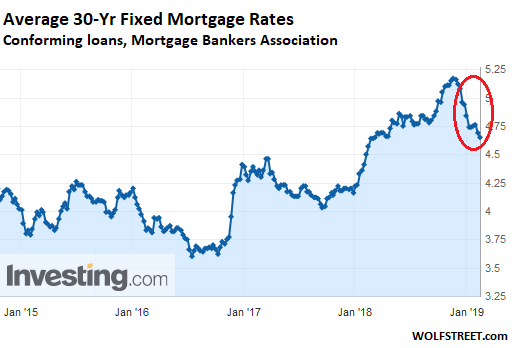
Numerous firms got in the mortgage market and increased competition, while at the same time, the swimming pool of feasible debtors and refinancers started to decrease rapidly. To increase the swimming pool, the authors argue that large companies encouraged their pioneers to participate in predatory lending, often finding borrowers who would take on risky nonconventional loans with high rate of interest that would benefit the banks.
This enabled banks to continue increasing revenues at a time when traditional mortgages were scarce. Firms with MBS providers and underwriters were then obliged to misrepresent the quality of nonconventional mortgages, frequently cutting them up into various slices or "tranches" that they might then pool into securities. Additionally, due to the fact that big firms like Lehman Brothers and Bear Stearns were participated in multiple sectors of the MBS market, they had high rewards to misrepresent the quality of their home mortgages and securities at every point along the lending procedure, from originating and issuing to underwriting the loan.
Collateralized debt commitments (CDO) several swimming pools of mortgage-backed securities (often low-rated by credit companies); subject to ratings from credit ranking companies to suggest threat$110 Standard home loan a type of loan that is not part of a particular government program (FHA, VA, or USDA) but ensured by a private loan provider or by Fannie Mae and Freddie Mac; generally repaired in its terms and rates for 15 or 30 years; usually comply with Fannie Mae and Freddie Mac's underwriting requirements and loan limits, such as 20% down and a how to get out of my timeshare credit history of 660 or above11 Mortgage-backed security (MBS) a bond backed by a pool of home mortgages that entitles the bondholder to part of the month-to-month payments made by the debtors; might consist of conventional or nonconventional home mortgages; based on scores from credit rating companies to indicate danger12 Nonconventional home mortgage government backed loans (FHA, VA, or USDA), Alt-A home loans, subprime home loans, jumbo mortgages, or house equity loans; not bought or safeguarded by Fannie Mae, Freddie Mac, or the Federal Real Estate Finance Company13 Predatory lending enforcing unfair and abusive loan terms on customers, typically through aggressive sales tactics; taking benefit of borrowers' absence of understanding of complex transactions; outright deception14 Securities fraud stars misrepresent or withhold details about mortgage-backed securities utilized by investors to make choices15 Subprime home loan a home loan with a B/C rating from credit firms.
FOMC members set monetary policy and have partial authority to manage the U.S. banking system. Fligstein and his associates discover that FOMC members were prevented from seeing the oncoming crisis by their own presumptions about how the economy works utilizing the framework of macroeconomics. Their analysis of conference records expose that as housing costs were rapidly rising, FOMC members consistently minimized the seriousness of the housing bubble.
The authors argue that the committee depended on the framework of macroeconomics to mitigate the severity of the oncoming crisis, and to validate that markets were working reasonably (what happened to cashcall mortgage's no closing cost mortgages). They keep in mind that the majority of the committee members had PhDs in Economics, and therefore shared a set of presumptions time share relief about how the economy works and depend on common tools to keep an eye on and control market anomalies.
46) - how do reverse mortgages work in utah. FOMC members saw the rate variations in the housing market as separate from what was occurring in the financial market, and presumed that the total economic effect of the housing bubble would be limited in scope, even after Lehman Brothers submitted for bankruptcy. In fact, Fligstein and colleagues argue that it was FOMC members' failure to see the connection in between the house-price bubble, the subprime home loan market, and the financial instruments used to package home mortgages into securities that led the FOMC to downplay the severity of the oncoming crisis.
What Are The Percentages Next To Mortgages - Questions
This made it nearly difficult for FOMC members to prepare for how a decline in real estate rates would affect the whole nationwide and global economy. When the mortgage industry collapsed, it stunned the U.S. and worldwide economy. Had it not been for strong federal government intervention, U.S. employees and homeowners would have experienced even higher losses.
Banks are once again financing subprime loans, especially in automobile loans and bank loan.6 And banks are as soon as again bundling nonconventional loans into mortgage-backed securities.7 More recently, President Trump rolled back a number of the regulatory and reporting provisions of the Dodd-Frank Wall Street Reform and Customer Security Act for little and medium-sized banks with less than $250 billion in assets.8 LegislatorsRepublicans and Democrats alikeargued that a lot of the Dodd-Frank arrangements were too constraining on smaller sized banks and were limiting economic growth.9 This brand-new deregulatory action, paired with the rise in dangerous financing and investment practices, could produce the economic conditions all too familiar in the time duration leading up to the marketplace crash.
g. include other backgrounds on the FOMC Restructure worker payment at banks to prevent incentivizing dangerous behavior, and increase guideline of new financial instruments Job regulators with understanding and monitoring the competitive conditions and structural changes in the financial market, particularly under circumstances when companies may be pressed towards scams in order to keep revenues.